
Macro Cycle
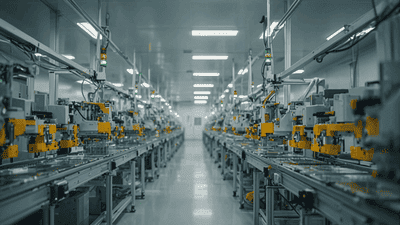
Yongding’s $1.13B Laser Chip Orders: The Hidden Supply Chain Behind AI Infrastructure
The most important correction comes before the investment thesis: Yongding’s disclosed laser-chip orders total approximately RMB 1.133 billion, not US$1.13 billion. The July 29, 2026 announcement identified a RMB 542 million order and a US$87 million order, translated at approximately RMB 591 million. Both amounts included tax. The combined value was roughly US$167 million at the exchange rate implied by the announcement.
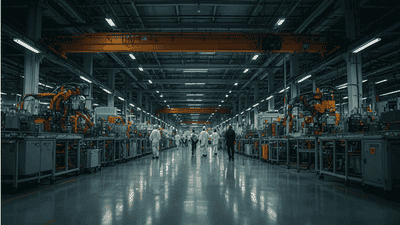
Chip IPO Wave in 2026: What CXMT’s $33B Listing Bid Means for Global DRAM Pricing
CXMT’s public-market funding strengthens its ability to challenge established DRAM suppliers, but an IPO does not immediately create cheaper memory. The pricing effect depends on how quickly capital becomes qualified output—and whether that output arrives before demand weakens.
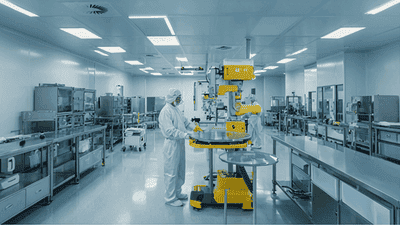
Alphabet’s Negative Free Cash Flow and AI CapEx Surge: The Semiconductor Spending Paradox
Alphabet’s negative quarterly free cash flow is not evidence that its operating business stopped generating money. It is evidence that infrastructure investment overtook that cash generation. For semiconductor suppliers, the same spending that squeezes Alphabet’s near-term cash flow can create substantial revenue opportunities.

OpenAI’s $73B Valuation and TSMC Self-Designed Chip: A New AI Vertical Integration Era
OpenAI’s move into custom silicon signals a new phase of AI integration: model developers increasingly want influence over the hardware that determines their costs, capacity, and product performance. But this is integration through partnerships, not a plan to own every layer of semiconductor manufacturing.
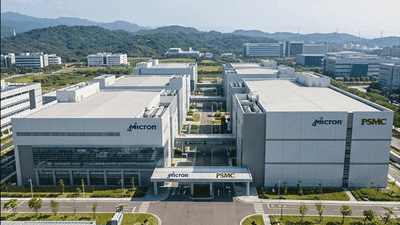
Micron’s $1.8B PSMC Acquisition: Inside the Taiwan DRAM Capacity Land Grab
Micron’s $1.8 billion Taiwan deal is not an acquisition of PSMC itself. It is the purchase of PSMC’s P5 manufacturing site in Tongluo, Miaoli County—a transaction that gives Micron existing cleanroom infrastructure and a route to expand advanced DRAM production faster than starting entirely from scratch.
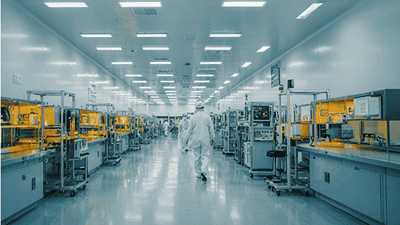
SK Hynix’s $15B Fab Bet: Why First Cleanroom Move-Up to February 2027 Matters
Three months can be a long time in memory manufacturing. Bringing a cleanroom forward from May to February 2027 gives SK hynix an earlier opportunity to install equipment, develop processes, and prepare capacity for customers. It does not guarantee three additional months of commercial shipments, but it can move the entire learning curve forward.
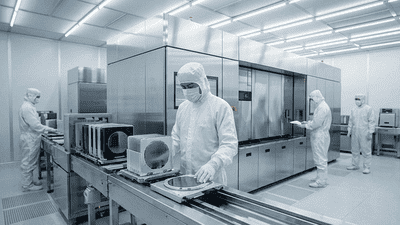
Japan’s Rapidus 2nm Pilot Line: Can Japan Reclaim Advanced Logic Leadership?
Japan can rebuild a position in advanced logic manufacturing. Whether Rapidus can turn that ambition into commercial leadership remains an open question—and the answer will depend on considerably more than transistor performance.

ASML’s High-NA EUV Partnership Trio: What Intel, Samsung, and TSMC Gain from the 2026 Deal
Intel gains an opportunity to turn early manufacturing experience into differentiation. Samsung gains a route toward more advanced DRAM production. TSMC gains a clearer long-term adoption path while preserving flexibility over when the technology enters its factories.

TSMC’s 2026 Equipment Procurement Raised to 1.9X: What It Signals for the Whole Supply Chain
TSMC’s equipment procurement signal points to something bigger than another strong quarter for chipmaking tools. It suggests that customer demand is forcing a rapid revision of manufacturing plans—and that the limiting factor is increasingly the supply chain’s ability to respond.
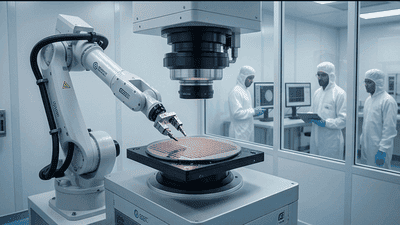
India’s Four Chip Fabs Going Live in 2026: Can 75% Local Production Become Reality?
India’s semiconductor manufacturing push is becoming operational, but the headline combines two claims that need separating. The four facilities originally expected to enter commercial production in 2026 were not four equivalent wafer fabs. And the government’s 70–75% ambition concerns the capability to design and manufacture chips for domestic applications—not proof that three-quarters of India’s semiconductor spending will soon become local factory revenue.

The HBM Pre-Sell Phenomenon: How SK Hynix Sold Out 2026 Capacity Before Year-End
Memory chips have traditionally been a business of uncomfortable surprises. Demand accelerates, manufacturers expand, inventories accumulate, and prices eventually fall. The technology changes; the cycle often feels familiar.

Samsung’s 471% Memory Revenue Surge: Decomposing the AI-Driven Earnings Explosion
A 471% increase in memory revenue is not a routine cyclical rebound. It is a signal that pricing, product mix, and customer demand have moved together with unusual force. For Samsung, the headline captures something larger than a strong quarter: artificial intelligence is changing where the semiconductor industry earns its money—and who ultimately pays for that transformation.

Semi Inventory Days Drop Below 90, Restocking Cycle Officially Begins
When semiconductor industry inventory days fall below the 90-day threshold, it’s more than a statistic — it’s a signal. After several years of volatile demand, over-ordering, and aggressive destocking, the recent decline in inventory days below 90 indicates the broad channel, distributor, and supplier stock positions are lean enough to trigger a deliberate restocking cycle. For investors, OEMs, procurement teams, engineers, and policymakers, the implications are material: lead times will lengthen for constrained parts, prices may firm in select segments, and capacity planning will shift from defensive idling toward targeted expansion.

Intensifying Semi Sector Divergence: The Trilogy of Analog, Digital, and Power
The semiconductor industry is no longer a single, unified story. Instead, it is increasingly a trilogy—three distinct but interdependent sectors whose economics, technology roadmaps, and demand cycles are diverging: analog, digital, and power. On the surface, all three deal with silicon and electrons; in practice, they respond to different customer needs, move at different speeds, and face different constraints.

The Impact of 2026 Semi Industry ESG Ratings on Financing Costs
By 2026, environmental, social, and governance (ESG) metrics have moved from the margins of semiconductor boardroom discussions to the center of capital‑markets conversations. Investors, lenders, and rating agencies now routinely bake ESG scores into their assessment of risk and return. For a capital‑intensive industry like semiconductors—where fabs cost tens of billions of dollars and balance sheets carry large debt loads—the way ESG ratings influence financing costs is no longer a theoretical concern.

The "Bullwhip Effect" in Semis – Which Stage Are We In?
The semiconductor industry is famous for its cycles, but behind those ups and downs lies a deceptively simple dynamic: small changes in end demand can amplify into huge swings in orders, capacity, and inventory further up the supply chain. This phenomenon is widely known as the bullwhip effect—and in semis, it is particularly powerful. Understanding where we are in the bullwhip sequence is crucial for chipmakers, OEMs, distributors, and investors who want to avoid being caught on the wrong side of the next swing.

Japan’s Semi Renaissance: Joint 2nm R&D Progress Among 8 Major Giants
Japan’s semiconductor industry is experiencing a genuine renaissance. After decades in which the country’s role shifted from dominant memory and logic supplier to more specialized niches in equipment, materials, and certain devices, a new wave of coordinated effort is pushing Japan back toward the leading edge of process technology.

Interpreting the Sentiment Signal as Wafer Fab Utilization Breaches 85%
Wafer fab utilization is one of the semiconductor industry's most closely watched operational metrics. When utilization climbs above key thresholds, it has ripple effects across pricing, lead times, equipment demand, supplier margins, and market sentiment.

R&D Intensity Ranking in Semis: Who Keeps Doubling Down on the Future?
In semiconductors, research and development is not just a line item—it is the engine that determines who sets the pace of technology and who follows. R&D intensity, usually measured as R&D spending as a percentage of revenue, reveals how aggressively companies are investing in their future versus harvesting their present.

Practical Application of the Inventory-to-Bill Ratio in Semi Industry
Semiconductor executives and investors spend a lot of time staring at numbers, but not all metrics are equally useful for understanding where the cycle is heading. Among the more practical indicators is the inventory‑to‑bill ratio: a simple comparison of how much product is sitting in stock versus how much is actually being billed to customers over a given period.
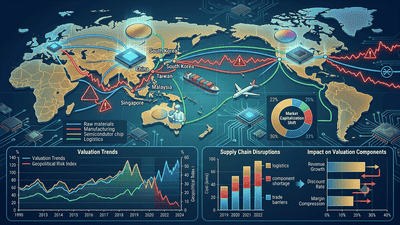
A Quantitative Model for Geopolitical Risk Premium in Semi Valuations
Geopolitics has moved from background noise to a central driver of semiconductor valuations. Export controls, regional subsidy races, onshoring mandates, and cross‑border M&A scrutiny all alter cash‑flow expectations and capital‑allocation decisions in ways traditional models often treat qualitatively, if at all.

Semi Equipment Procurement Lead Times Extended to 12 Months
In semiconductor manufacturing, time is as critical a resource as capital. When lead times for key tools stretch from a few months to a full year, the ripple effects can reshape fab build schedules, technology roadmaps, and industry supply dynamics. The extension of equipment procurement lead times toward the 12‑month mark is more than an operational inconvenience;

Analyzing the Distortion Effect of Government Subsidies on Semi FCF
Government subsidies have become a central feature of the modern semiconductor landscape. From grants and tax credits to low‑cost loans and direct equity participation, public programs now influence where fabs are built, how capacity is expanded, and which companies lead in critical technologies. On the surface, these subsidies often look like free or cheap money that improves investment economics.

2026 Global Semi CapEx Map: The Divergence Between Advanced and Mature Nodes
The semiconductor industry entered 2026 with a clearer, more bifurcated capital expenditure landscape than at any point in the past decade. As hyperscalers and AI-driven computing demands continue to escalate, foundries and integrated device manufacturers (IDMs) prioritize advanced-node capacity (3 nm, 2 nm and next-generation gate-all-around architectures).

Global Semi M&A Value Hits 5-Year High, Consolidation Wave Accelerates
When global semiconductor M&A value hits a five‑year high, it is more than a headline about deal flow—it is a structural signal. Rising transaction values and a thick pipeline of strategic deals tell us that industry leaders believe scale, integration, and portfolio breadth are increasingly essential in a market shaped by AI, automotive electrification, industrial automation, and geopolitical tension. The current consolidation wave is not the first the sector has seen, but it is distinct in scope and motivation.

The Unexpected Correlation Between Semi Sentiment and Crypto Mining Demand
Semiconductors and cryptocurrencies might seem like inhabitants of different worlds: one, a physical industry of fabs, wafers, and equipment; the other, a digital realm of tokens, blockchains, and speculative cycles. Yet over the past decade, an unexpected correlation has emerged between sentiment in the semiconductor sector and demand from crypto mining. When miners are euphoric and building out capacity, semi sentiment often improves;

SE Asia’s Share of Global OSAT Capacity Breaks 20% for the First Time
Outsourced Semiconductor Assembly and Test (OSAT) has long been the quiet backbone of the chip industry, turning bare wafers into usable, reliable packaged devices. For decades, much of the attention has focused on front‑end fabrication hubs in the US, Europe, Taiwan, Korea, and increasingly China.

Regional Reconfiguration of Global Semi Supply Chain: US-EU-SEA Triangle
The global semiconductor supply chain is undergoing a profound regional restructuring. Instead of a largely Asia‑centric manufacturing network feeding design and demand hubs elsewhere, the industry is evolving into a more segmented, multi‑pole system anchored by three increasingly distinct regions: the United States, the European Union, and Southeast Asia (SEA).

2H 2026 Semi Order Visibility Survey: Views from 50 Procurement Managers
As the semiconductor industry enters the second half of 2026, procurement teams find themselves in a markedly different environment than the one that defined the past three years. Shortages and emergency allocation have receded, inventories have largely normalized, and new regional capacity is ramping under various industrial policy programs.

Europe’s Chips Act Catch-Up Dilemma: The Gap Between Capacity Targets and Reality
Europe’s Chips Act was launched with a bold ambition: to roughly double the continent’s share of global semiconductor production and secure strategic autonomy in a technology that underpins everything from cars and industrial equipment to cloud computing and defense systems. Policymakers framed it as a catch‑up mechanism—Europe would move from dependence on foreign fabs toward a more balanced, resilient ecosystem.

The Structural Contradiction of Layoffs and Mass Hiring Co-Existing in Semi Industry
The semiconductor industry has always been cyclical, but the current moment feels particularly paradoxical. In the same headlines, we see announcements of layoffs, hiring freezes, and project cancellations alongside news of massive recruitment drives, new fab construction, and aggressive talent campaigns.
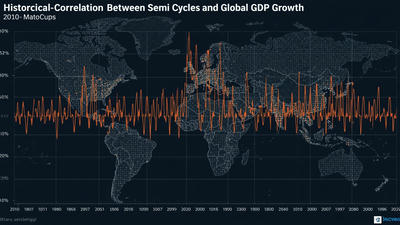
Historical Correlation Between Semi Cycles and Global GDP Growth
Semiconductor industry cycles and global GDP growth are deeply intertwined. Semiconductors power consumer electronics, data centers, automobiles, industrial automation, and countless embedded systems that form the backbone of modern economic activity. Conversely, macroeconomic conditions shape consumer demand, corporate capex, and the financing environment that determine fab investment and inventory behavior.

Inventory Adjustment Done – Lead Times Shorten to Normal Levels
The semiconductor industry has finally exited a long and painful inventory adjustment phase. After years of oscillating between shortages and surplus, channel inventories and supplier stock levels have normalized, and lead times for many critical components are returning to what manufacturers recognize as “normal” ranges.

SiC and GaN 3rd-Gen Semi Penetration Rates Breach the Tipping Point
For years, silicon carbide (SiC) and gallium nitride (GaN) were discussed as promising “next‑generation” power semiconductor materials with clear technical advantages but limited commercial deployment. Their adoption curves were slow, constrained by cost, supply chain maturity, and conservative design practices in automotive and industrial markets.

Global Semi Sales Post 8 Consecutive Months of Positive Growth, New Uptrend Confirmed
The semiconductor industry has crossed a meaningful threshold: eight consecutive months of positive year‑over‑year sales growth. That streak signals more than a short-term rebound. It suggests a structural rebalancing between demand and supply, improved capital discipline across the value chain, and the emergence of durable demand drivers that could support a multi‑quarter uptrend. For investors, OEMs, procurement teams, engineers, and policymakers, this turning point requires a shift in tactics—from defensive cost control and aggressive destocking toward selective restocking, targeted investment, and technology prioritization. This article examines why eight months matters, what’s driving the recovery, which subsegments will benefit most, the risks that remain, and practical actions stakeholders can take now.
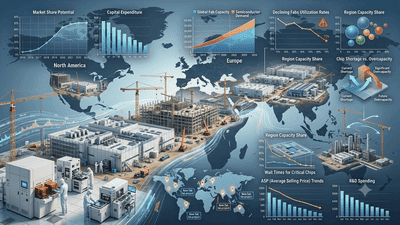
Reassessing Global Semi Overcapacity Risks: A 2027 Outlook
Semiconductor capacity is expanding at a pace the industry has rarely seen. From large-scale fab projects in the United States and Europe to continued investments across Asia, the global wafer and packaging footprint heading into 2027 looks very different from what it was just a few years ago.

Auto Chip Supply-Demand Reversal: From Extreme Shortage to Structural Surplus
Only a few years ago, automakers around the world were halting production lines because they could not secure enough chips. Waiting lists for vehicles stretched out, component allocations were rationed, and procurement teams scrambled to find even small volumes of critical microcontrollers and power devices. Today, the picture looks very different. In multiple auto chip categories, supply has not just caught up with demand—it has overshot. What was once an extreme shortage is increasingly turning into a structural surplus.

QoQ Revenue Growth Ranking of Global Top 10 Semiconductor Firms
Quarter‑on‑quarter (QoQ) revenue growth for the world’s largest semiconductor firms offers a fast, quantitative snapshot of who is winning incremental demand at any given point in the cycle. It does not tell the whole story of structural strength, but it shows where momentum is moving in the near term—whether toward AI accelerators and advanced nodes, toward memory and storage, or toward analog and power devices tied to autos and industrial markets.
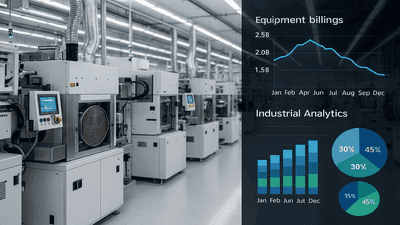
Leading Indicator: Interpreting North American Semi Equipment Billings
North American semiconductor equipment billings are one of the industry’s most watched data points. They capture how much chipmakers are actually spending on tools—lithography systems, etch and deposition equipment, inspection and metrology gear, and packaging machines—to build and upgrade fabs.

Using TSMC Monthly Revenue as a Bellwether for Global Semi Cycle Inflections
In the modern semiconductor industry, no single data point attracts more regular attention from market watchers than the monthly revenue disclosure of Taiwan Semiconductor Manufacturing Company (TSMC). Month after month, this one series of numbers sparks commentary about where the chip cycle stands, how demand for advanced nodes is evolving, and what lies ahead for everything from smartphones and PCs to AI infrastructure and automotive electronics.

Tracking CHIPS Act Subsidy Disbursements: Which Companies Have Received Funds?
The CHIPS and Science Act has moved from legislation on paper to money on the table. Passed in 2022, it earmarks tens of billions of dollars in subsidies and tax incentives to rebuild U.S. semiconductor manufacturing, advanced packaging, and upstream supply chains, alongside new support for emerging domains such as quantum computing.
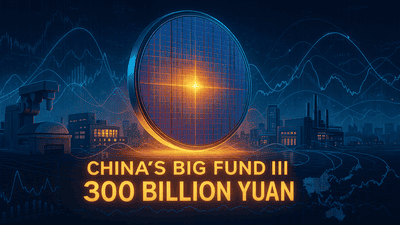
Big Fund III’s 300B Yuan Allocation: Equipment, Materials, and HBM Breakdown
China’s third national semiconductor investment vehicle—commonly referred to as “Big Fund III”—marks a new phase in the country’s effort to build a more self‑sufficient and globally competitive chip ecosystem. With a planned war chest on the order of 300 billion yuan, the fund is widely expected to pivot from simply backing wafer capacity toward deeper, more targeted investments in equipment, materials, and memory technologies such as high‑bandwidth memory (HBM).